FIFE VIRTUAL HAND CLINIC – Patient decision guidance
If you have been diagnosed with carpal tunnel syndrome, you may be sent a letter explaining your options. The best treatment choice depends on your symptoms, how they are changing, and what matters to you.
This page is about choosing a treatment. It is intended for patients whose nerve conduction studies have confirmed carpal tunnel syndrome, and who have been asked to consider their treatment options. For an explanation of the condition itself, see our main carpal tunnel syndrome page.
There are three reasonable approaches to treatment
1) WAIT AND SEE
Mild symptoms often improve without treatment. If symptoms are not interfering with activity or sleep, and not worsening, it is very reasonable to do nothing. Alternatively, wearing a splint at night may keep symptoms at bay.
Trade-off: improvement is not guaranteed, and worsening numbness or weakness needs reassessment.
2) STEROID INJECTION
A steroid injection may provide relief, although symptoms can return. Changing activities that aggravate symptoms may also help. Around half of patients are satisfied at one year after steroid injection.
Trade-off: Steroid injection can help avoid an operation but may not provide lasting relief.
3) CONSIDER SURGERY
Carpal tunnel release or decompression aims to relieve pressure on the nerve. It is more likely to be considered when symptoms persist, worsen, or there is evidence of significant nerve dysfunction.
Trade-off: surgery offers a good chance of improvement but involves recovery time and a small risk of complications.
If your symptoms have changed since your nerve conduction studies: please contact our team if you have developed constant numbness, increasing weakness or clumsiness, or wasting of the thumb muscles. These changes may indicate worsening nerve function and should be reviewed rather than simply waiting. If these symptoms were already present when you were assessed, you can still use this page to consider your options, but please contact us if you are unsure what to do.
What are the chances of feeling better with each treatment?
Research carried out in Fife gives us a useful picture of how people fare with different treatments. The coloured bars show approximately how many people, out of 100, reported improvement at one year.
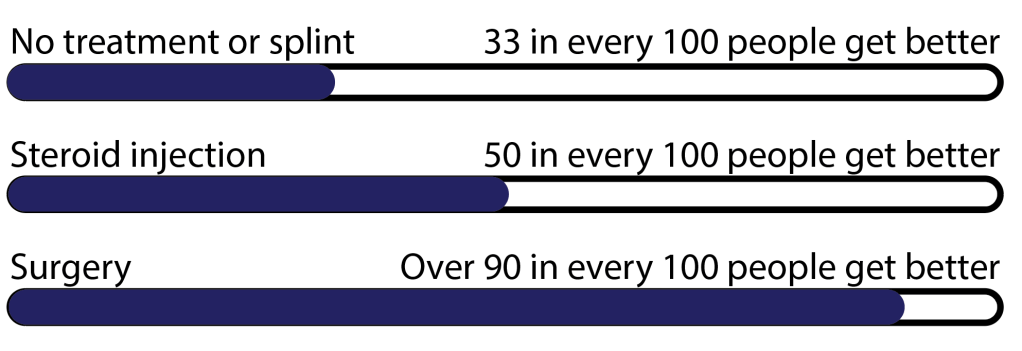
Source: Fife clinical research. These are approximate figures for improvement at one year, not necessarily complete recovery. Individual outcomes vary. The bars illustrate the reported results and do not establish that treatments were compared in a randomised trial.
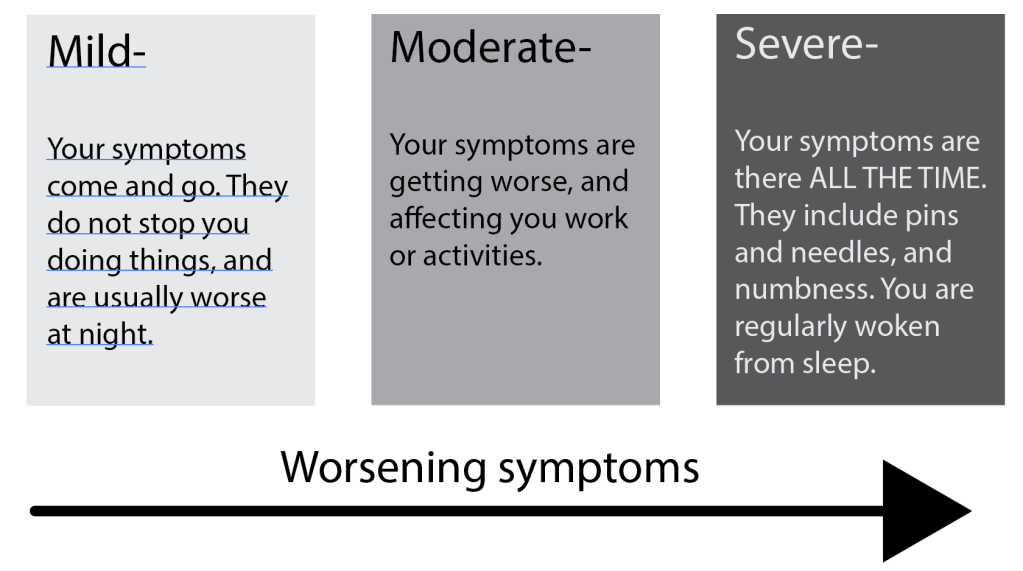
Symptom severity
Making your decision
Your nerve conduction studies have already been reviewed by our team, so you do not need another appointment simply to make this decision.
Think about how severe your symptoms are. If you think they are MILD, then probably the best thing to do is WAIT AND SEE WHAT HAPPENS. If they settle over the next few months, then great! BUT, if they get worse, you can always change to one of the other options.
If your symptoms are MODERATE, consider STEROID INJECTION or SURGERY. Surgery is more likely to give permanent relief, but usually needs time off work (around 4 weeks for jobs using your hands).
If you think a steroid injection is the way forward, please read our page on Having a steroid injection.
If you would like to have surgery, please read our page on Having a carpal tunnel decompression, which explains the operation and what to expect afterwards.
Please contact the team if you have developed constant numbness, increasing weakness or clumsiness, or wasting of the thumb muscles since your nerve conduction studies. These symptoms should be reviewed rather than managed by waiting alone.
The choice is yours, based on your symptoms, the results of your assessment and what matters most to you. If you would rather discuss your treatment options with a team member then contact us.

